Analysis
Local vs cloud LLMs in 2026: does the new Mac mini change the math?
Key takeaways
- The August 2026 Mac mini (M6 / M5 Pro) improves the hardware side of local inference. It does not erase frontier cloud models.
- Local wins on privacy, predictable unit cost at steady volume, and low-latency agent loops on your LAN. Cloud wins on peak capability, multimodal breadth, and zero ops.
- Management choice in 2026: run a hybrid. Use the mini (Ollama / LM Studio / MLX) for default workloads; route hard tasks to ChatGPT, Claude, or APIs via Together AI / similar.
- “Changed the math” only if your workload is high-volume, privacy-sensitive, or agent-chatty enough that API bills and data boundaries hurt. Otherwise a mini is optional.
- Buy memory for local; buy APIs for capability. Do not confuse Apple’s LM Studio speed claims with “we can delete our OpenAI invoice.”
Table of contents
- What changed with this Mac mini
- Cost and privacy math
- Capability math
- Decision framework
- Where MLX and Ollama fit
- FAQ
What changed with this Mac mini
Apple’s pitch (August 25, 2026): faster on-device AI, Neural Accelerators in GPU cores, Dual 16-core Neural Engine on M6, up to 64GB and TB5 on M5 Pro, and explicit agentic / always-on desktop language.
For local LLM managers, the practical deltas are:
- More credible deskside server in the same 5-inch footprint
- Higher memory ceiling on Pro for larger open weights
- Vendor-normalized benchmarks via LM Studio claims (directional only)
- Ecosystem timing: Silicon runtimes (Ollama, LM Studio, MLX) already treat Mac as first-class
What did not change: training giant models from scratch on a mini, matching every frontier cloud eval, or eliminating model management work.
Cost and privacy math
| Factor | Local on Mac mini | Cloud API |
|---|---|---|
| Marginal cost per 1M tokens | Mostly electricity + amortization of hardware | Metered vendor price |
| Data path | Can stay on device / LAN | Leaves your network (unless private VPC offerings) |
| Ops time | Updates, disk, pinning, incident response | Mostly key management and evals |
| Burst scale | One (or a few clustered) boxes | Vendor elasticity |
Local gets cheaper as volume rises and models fit. Cloud stays cheaper when usage is spiky or you need a model you cannot host.
Privacy is often the real reason teams buy a mini: code, CRM notes, and internal docs never become someone else’s training anecdote. That is a policy win even when tokens/sec are merely “good enough.”
Capability math
Honest split in 2026:
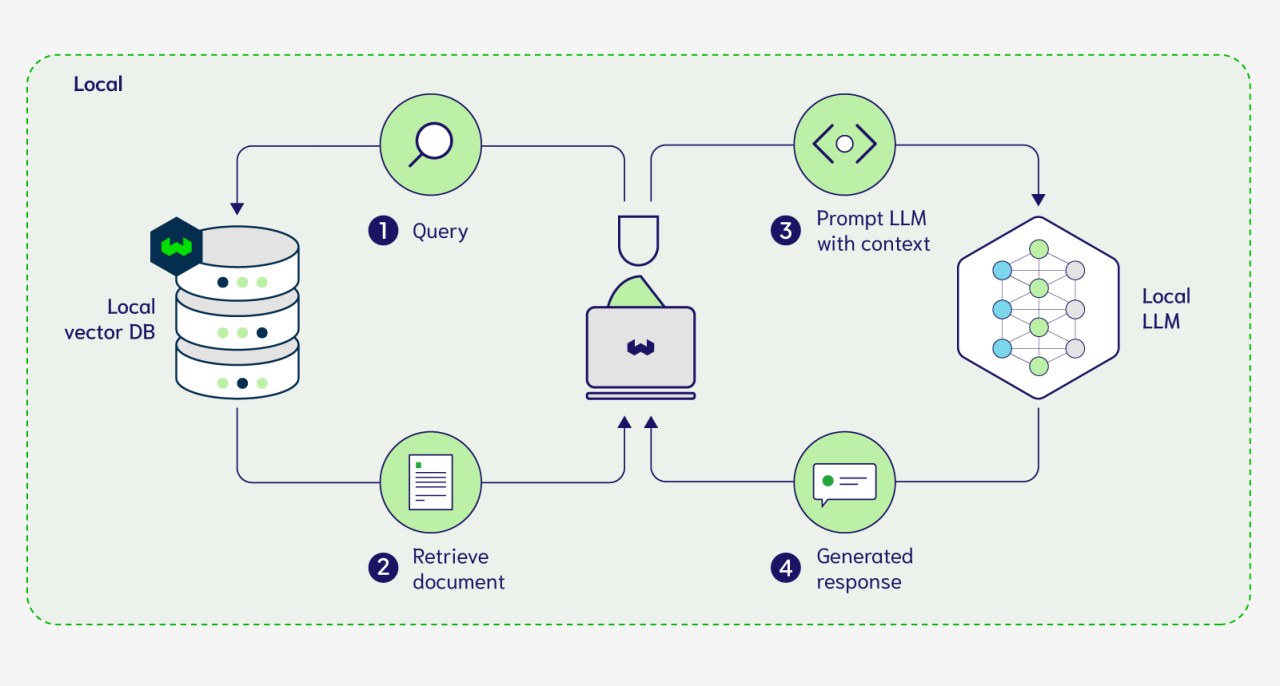
- Local open weights: strong for drafting, classification, coding assistance, RAG over private corpora, offline demos
- Cloud frontier: still ahead on hardest reasoning, broad tools, and many multimodal flows
Apple Intelligence on macOS 27 adds another on-device / Apple-hosted assistant layer. It is complementary to, not a replacement for, open-weight servers you control.
Decision framework
Use this when someone asks “should we go local because of the new Mac mini?”
| If your constraint is… | Bias to… | |---|---|---| | Sensitive data must not leave the building | Local default (Mac mini server) | | We need the best answer regardless of vendor | Cloud frontier | | High steady chat/agent volume, models fit in 32-64GB | Local for defaults; cloud for overflow | | Spiky usage, few users | Cloud | | Agent loops hammering an API all day | Local endpoint on LAN | | We lack anyone to own model ops | Cloud (or managed hosts) |
Hybrid pattern that usually wins:
- Mac mini serves the default small/mid model for IDE and internal bots
- Router sends “hard” tasks to Claude / ChatGPT / a hosted open model API
- Logs tell you when to grow RAM or when to stop pretending local covers everything
Where MLX and Ollama fit
Inside the local half of the hybrid:
- Ollama: operational simplicity and an API your tools already understand
- LM Studio: operator-friendly serving and the benchmark surface Apple cited
- MLX: when you optimize for Apple Silicon throughput or fine-tune workflows
Cloud half stays productized: ChatGPT, Claude, coding in Cursor with cloud models, or GPU APIs through Together AI when you want hosted open weights without owning hardware.
See also: Mac mini M6 vs M5 Pro for local LLMs and Mac mini as a local LLM server.
4 curated tools below.

ChatGPT
ChatGPT is OpenAI's flagship conversational AI on web, mobile, and desktop. It covers writing, coding, research, image/video, voice, and agentic work. As of late 2026, paid Work and Codex surfaces expose the GPT-6 family (including GPT-6.1 Sol), while Pro/Business Premium users in eligible markets get OpenAI Dots: always-on agents with their own cloud computer.

Claude
Claude is Anthropic's AI assistant for nuanced writing, long-context reasoning, and coding via Claude Code. The Claude 5.5 family (including Sonnet 5.5, launched September 28, 2026) is the current default for fast, cost-efficient professional and coding work on claude.ai and the Claude API.

Cursor Ai
Cursor is an AI-native code editor (VS Code fork) for software developers. Agent mode plans and edits across your repo with frontier models (GPT, Claude, Gemini, and others). Tab completions stay unlimited on paid plans; agent and premium model use is metered. Use Cursor when you want full-repo context inside the editor. Prefer GitHub Copilot when PR review and GitHub-native seats matter more. Many teams run both.

Together AI
Together AI is a cloud platform for running, fine-tuning, and training open-source and proprietary AI models at scale. It offers serverless inference across chat, vision, image, audio, video, transcription, embedding, and reranking models, along with dedicated GPU endpoints, on-demand/reserved GPU clusters (H100, H200, B200, GB200), and managed fine-tuning. It serves AI developers, startups, and enterprises such as Cursor, Zoom, and Salesforce building on open models.
| Tool | Best for | Pricing | Billing note |
|---|---|---|---|
| ChatGPT | AI chatbot / general-purpose assistant | Freemium | Free Trial |
| Claude | AI chatbot / reasoning & coding assistant | Freemium | Free Trial |
| Cursor Ai | Code | Freemium | Free Trial |
| Together AI | 3D | Paid | Paid Service |
Frequently asked questions
Does the new Mac mini make local LLMs “worth it” in 2026?
It makes local **more practical** for deskside agents and privacy-sensitive defaults. Worth it depends on volume, data boundaries, and whether someone will manage models. Hardware alone does not create an ROI.
Is local cheaper than ChatGPT or Claude?
At low usage, cloud is usually cheaper and easier. At high steady volume with models that fit your RAM, local amortization can win. Run the numbers on your token counts; do not use Apple’s speed claims as a finance model.
Should startups buy Mac minis instead of API credits?
Most startups should keep APIs and add a mini when privacy, latency, or bill shock appears. Buying hardware to feel independent before you have load is a common mis-sequence.
Will Thunderbolt 5 clustering replace a GPU server?
Unlikely for serious multi-tenant serving. It may help enthusiasts and small teams stretch on-device capacity. Validate software support before you design around it.
What is the smartest stack after this announcement?
Hybrid: Mac mini + Ollama or LM Studio for local defaults; cloud frontier for hard tasks; clear routing rules. That is local LLM management, not a hardware unboxing.