Comparison
Agent harness vs MCP: what each one is for
Key takeaways
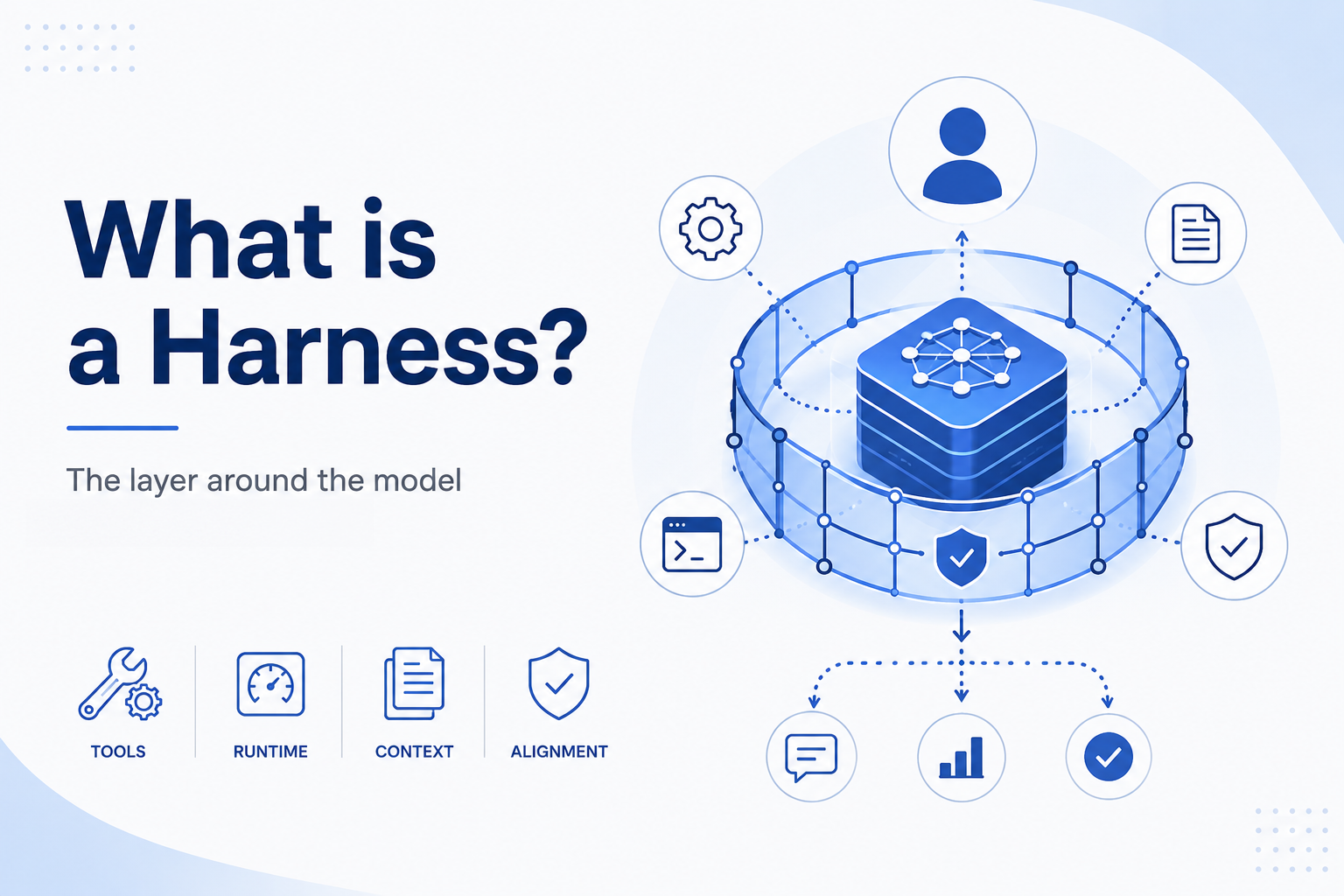
- Harness = how the agent runs (loop, memory, sandbox, permissions, channels).
- MCP = how tools and context plug in (a protocol many harnesses support).
- You pick a harness to live in. You add MCP servers to extend what it can touch.
- Investing in MCP connectors often survives a harness swap better than proprietary tool glue.
Table of contents
Side-by-side
| Agent harness | MCP (Model Context Protocol) | |
|---|---|---|
| What it is | Runtime that turns a model into an operating agent | Open protocol for connecting tools and data to AI clients |
| Job | Loop, memory, sandbox, guardrails, UX/channels | Standardize tool/context interfaces |
| You "buy" or "run" | Cowork, ChatGPT agent, Grok Bot, Hermes, OpenClaw, Claude Code… | MCP servers and clients inside those products |
| Swappable? | Changing harness changes the product feel | Same MCP server can serve multiple MCP-capable clients |
| Alone enough? | Yes for a working agent | No. MCP without a loop is just connectors |
How they fit together
A harness that supports MCP can attach servers (filesystem, GitHub, CRM, browser helpers) without rewriting every integration for that one product.
Examples in practice:
- Claude Cowork / Claude products: connectors and MCP-style tool surfaces inside Anthropic's managed harness.
- Hermes and OpenClaw: open harnesses that can grow tools via plugins and MCP where supported.
- ChatGPT agent: OpenAI's managed harness with its own tool and app ecosystem (not "MCP or nothing," but the same idea: tools plug into a runtime).
- Grok Bot: managed harness with app logins and cloud computer; tool access is product-shaped more than DIY MCP.
Mental model: harness is the car; MCP is a standard hitch for trailers. You still need the car.
What people get wrong
- "We'll just use MCP instead of an agent." MCP does not schedule work, remember last week, or approve spend.
- "Our harness replaces MCP." Proprietary tools work until you want portability.
- "More MCP servers = better agent." Bad permissions and no memory still produce chaos.
For the definition deep dive, see What is an agent harness. For picking products, see Best agent harness 2026.
No tools are tagged for this page yet. Browse all tools on the homepage or try another guide.
Nothing listed here yet.
Back to all AI toolsFrequently asked questions
Is MCP an agent harness?
No. MCP is a connectivity standard. The harness is the runtime that may speak MCP.
Should SMEs care about MCP yet?
Care when you are wiring many tools or expect to change clients. For a first [Cowork](/tool/claude-cowork) or ChatGPT agent pilot, use built-in connectors first; add MCP when you hit a gap.
Does every harness support MCP?
No. Support is uneven and version-dependent. Check the product docs before you bet a roadmap on it.